Alopecia totalis is an autoimmune disease that causes complete hair loss on the entire scalp. The condition is a more advanced form of alopecia areata and occurs when the immune system attacks the hair follicles. It is a non-scarring type of hair loss and can affect both men and women of different ages.

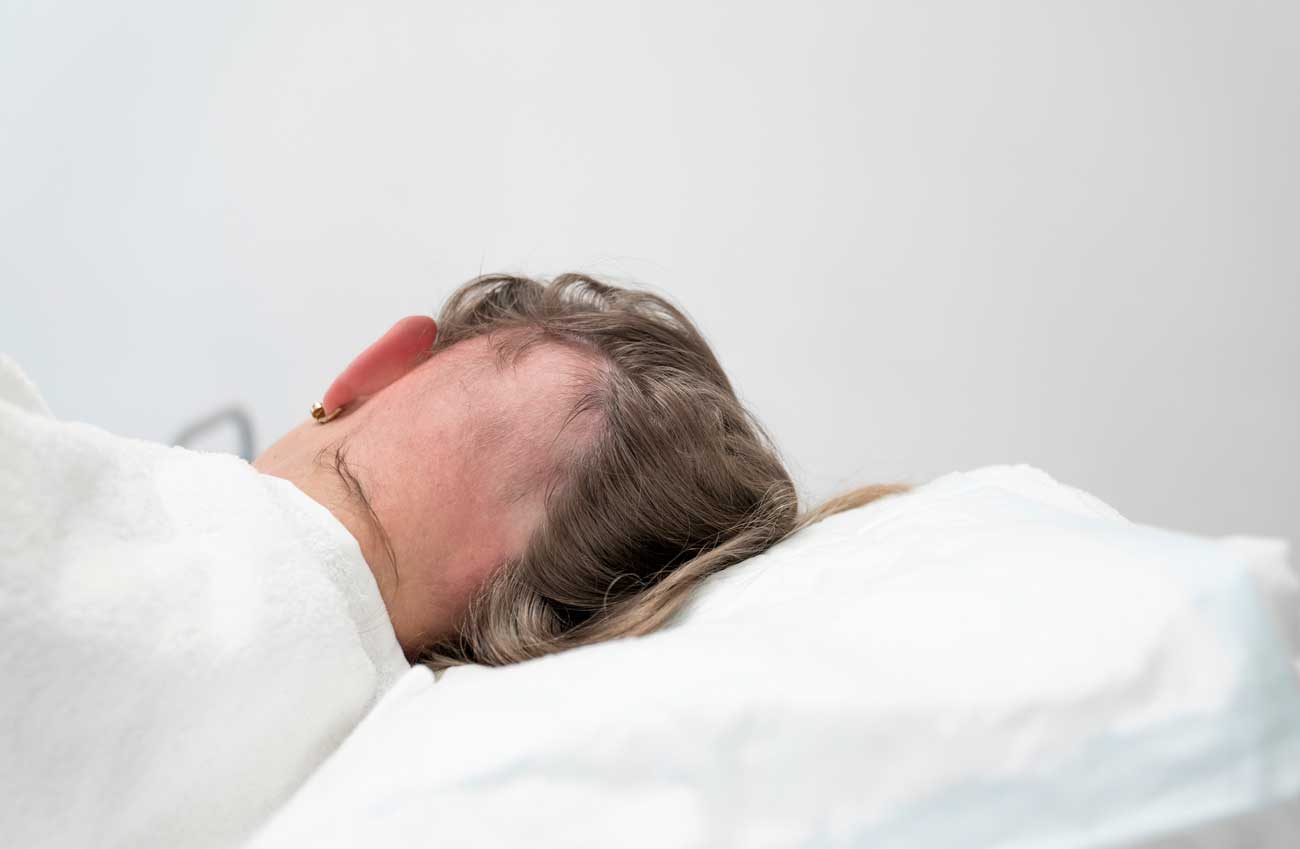
Neither studies nor research have been able to determine the cause of some people suffering from alopecia totalis.
There is a certain heredity in all types of autoimmune diseases that go by the name alopecia — such as Alopecia areata, alopecia totalis and Alopecia universalis.
The disease can start with minor spots on the head, or the customer only loses hair on half of the head, and then progresses to the customer losing all of their hair. It can go incrementally, but it can also go very quickly.
Of the people who get spotty hair loss so 5% develop alopecia totalis.

Treatment includes several options depending on the type and severity of hair loss. Common treatments include topical agents such as minoxidil, oral medications such as finasteride, and corticosteroid injections to reduce inflammation. Other methods include PRP (Platelet-Rich Plasma) therapy and hair transplants. Consult a dermatologist for a customized treatment plan.
Alopecia totalis is an incurable disease for which there are currently no treatments. The hair loss of the disease, on the other hand, can be alleviated with the treatment of PRP and dermaroller.
These treatments create a mild and controlled trauma to the skin that causes the disease to focus on healing the damage instead of attacking the hair follicles.
In addition, PRP contributes to increased hair growth thanks to the content of growth factors, which give the hairs a chance to start growing again.

Book consultation
Free consultation — no obligation, just a first step towards understanding what's right for you. Choose the clinic that suits you best.