







Alopecia universalis
Alopecia Universalis is the rarest and most severe form of autoimmune hair loss and is a disease that involves the gradual disappearance of all body hair, including eyebrows, eyelashes and body hair. The condition can affect both adults and children and in some cases can even lead to damage to the nails.
Hair loss on the head can be alleviated with PRP treatment. The treatment creates a mild and controlled trauma to the scalp that causes the disease to focus on healing the damage instead of attacking the hair follicles.

About Alopecia universalis
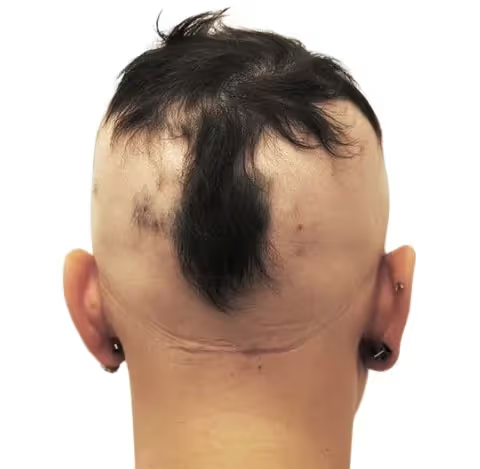
Alopecia Universalis is a further development of the autoimmune disease alopecia areata, in which the body's immune system mistakenly attacks the hair follicles. In its milder form, the disease leads to spotting hair loss, most often on the head, in the beard or on the legs. In some, the condition progresses to Alopecia totalis (hair loss on the entire head), and in very rare cases further to Alopecia Universalis which is a disease in which all hair on the body is lost.
The condition is caused by a genetic mutation, and around 20% of those affected have a close relative with the disease. Since the hair roots are not destroyed, but simply “dormant”, a theoretical possibility of regrowth exists, but in practice is very rare. The disease remains a medical challenge, and even the most advanced treatment methods have limited efficacy
Symptoms of Alopecia universalis
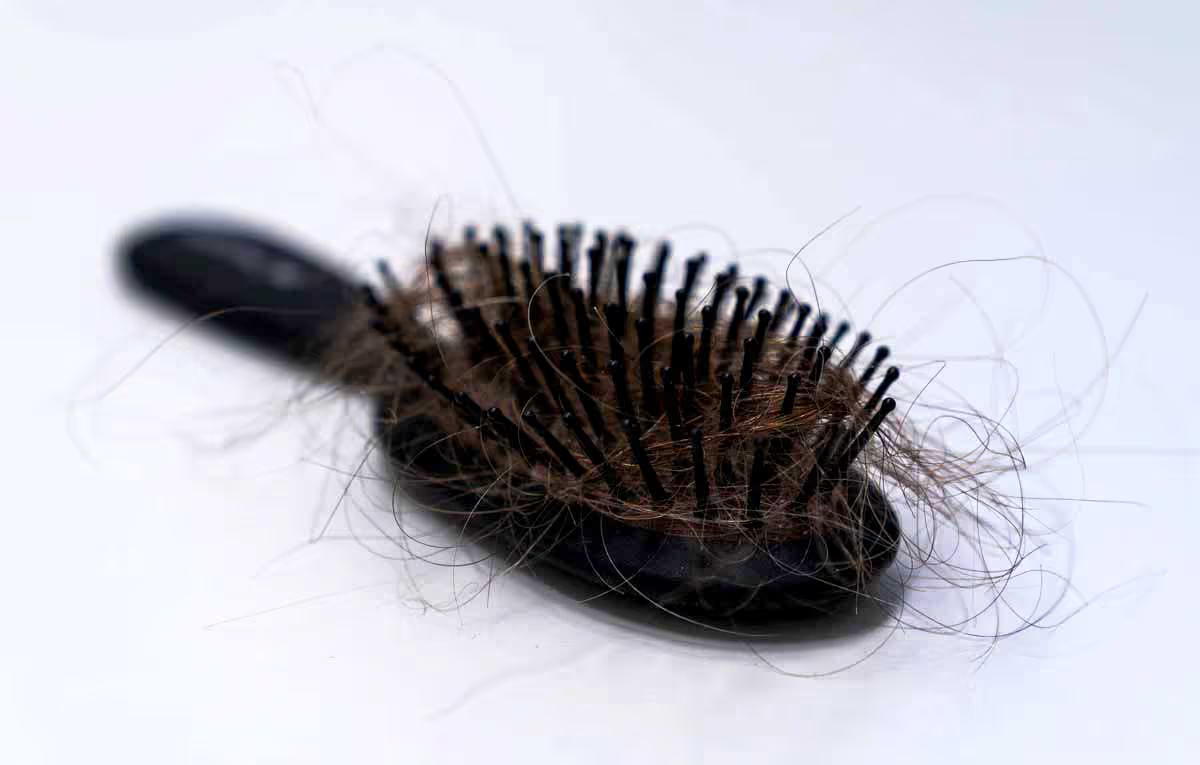
Alopecia universalis is characterized by a total loss of body hair, including the scalp, eyebrows, eyelashes, beard and other body hair. The disease often begins as alopecia areata, with one or more bald patches, usually on the head. These spots can vary in size and often occur very quickly, sometimes in the space of a few days.
As the condition progresses to alopecia aniversalis, the hair loss gradually spreads until all hair is gone, both on the head and the rest of the body. The skin where the hair has fallen off is usually soft, smooth and without redness or irritation. Despite the extensive hair loss, people with alopecia universalis are generally otherwise healthy, and the condition rarely gives rise to other physical symptoms.

Can Alopecia universalis be treated?
Alopecia universalis, unfortunately, cannot be cured and today there are no treatments for the disease. However, hair loss on the head can be alleviated with PRP treatment. The treatment creates a mild and controlled trauma to the scalp that causes the disease to focus on healing the damage instead of attacking the hair follicles. The growth factors found in PRP contributes to increased hair growth, which gives the hairs a chance to start growing again.
Vitamin supplements, health foods and laser treatments have been tested, but have shown no documented effect. Also drugs used in male pattern baldness, such as Minoxidil, has limited action in this type of autoimmune hair loss. In some cases, you can get a wig.

Book consultation
We help you with your hair loss
Free consultation — no obligation, just a first step towards understanding what's right for you. Choose the clinic that suits you best.