







Symptoms of alopecia areata as a woman
Alopecia areata in women occurs when the immune system mistakenly attacks the hair follicles and causes spotty hair loss. The condition is characterized by round, bald patches on the scalp and sometimes on other parts of the body. Women of all ages can be affected. Treatments include corticosteroids, immunotherapy and JAK inhibitors.
Causes
Alopecia areata is caused by an autoimmune reaction in which the body's immune system attacks the hair follicles. It leads to spotty hair loss, most often on the scalp. The exact cause of the disease itself is not established, but research points to a combination of genetic factors, stress and possible environmental triggers. The disease can debut suddenly and varies in both extent and course — some get their hair back spontaneously while others experience recurrent episodes.
Is alopecia areata more common in women than men?
The condition affects both men and women, but in women the hair loss can often be experienced as more psychologically stressful because it affects self-esteem and identity.
What does alopecia areata look like in women?
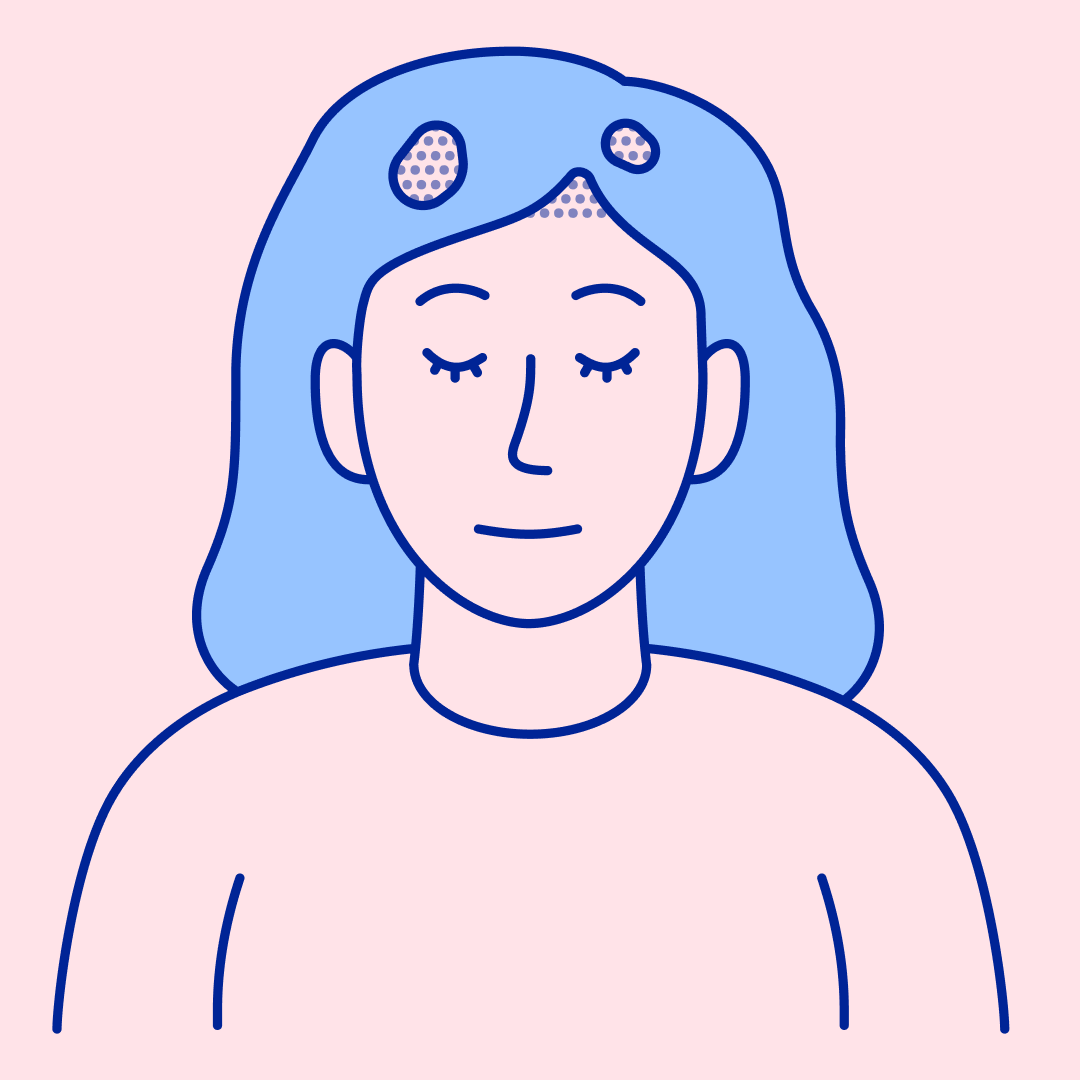
Hos women with hair loss Alopecia areata most often manifests itself as round or oval bald patches on the scalp. The skin in the affected areas is usually smooth and without signs of inflammation. In some cases, it can even affect eyebrows, eyelashes or other body hair. Hair loss often occurs suddenly and can progress quickly. Some women also experience a tingling or itchy sensation in the skin just before the hair falls off.
Treatment options
Topical treatment
There are several topical treatments that can be used to treat alopecia areata, including creams, ointments, and lotions that contain corticosteroids or other immunomodulating agents.
Immunotherapy
Immunotherapy is a treatment that involves applying a substance to the skin that irritates it and stimulates the immune system to attack the hair follicles. This can help stimulate hair growth.
Hair Simulation
Hair simulation is a technique in which tiny pigments are injected into the scalp to create the illusion of hairs. This is an effective treatment for people with alopecia totalis or alopecia universalis.
PRP treatment
PRP is an all-natural injection treatment that nourishes the hair follicles. PRP has been shown to be effective for women with alopecia areata, as it can promote hair growth by stimulating hair follicles and causing them to start producing more, thicker and stronger hair again.
Hair Transplant
Today, it is becoming increasingly common to undergo a Hair Transplant as a woman. Most often, women transplant hair to the folds, but also other bald areas on the head.

