





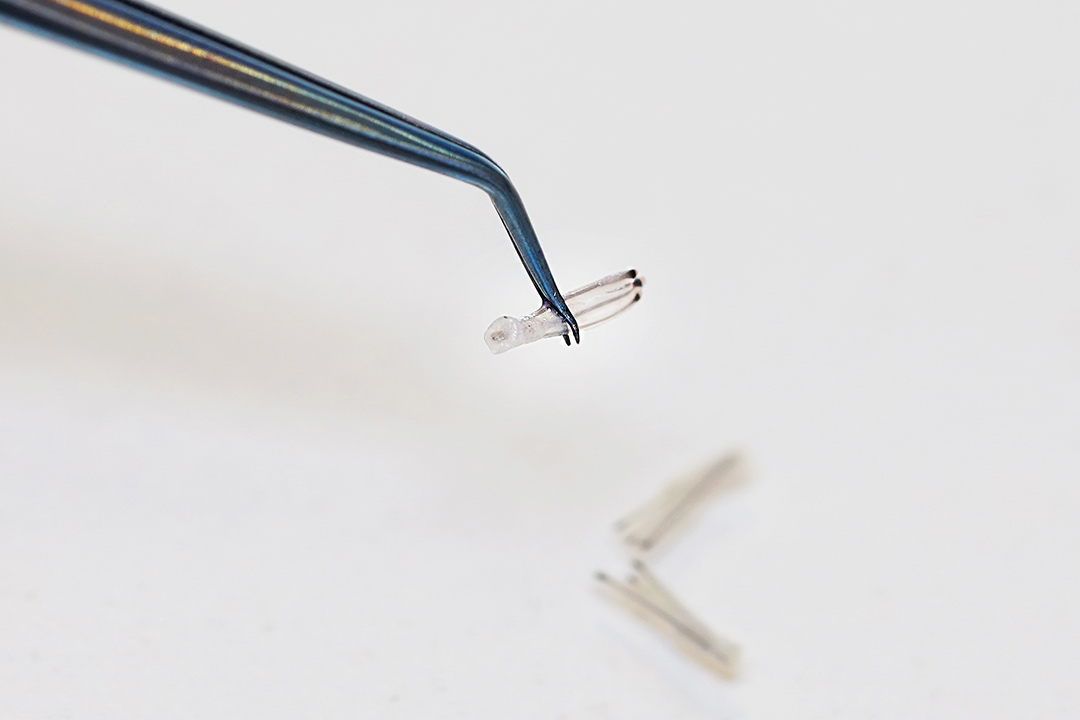
A small device of great importance
Each graft consists of one or more hair follicles. On average, a graft contains about 2.5 hairs -- sometimes just one, sometimes three or even four. Each hair has its own hair follicle with its own blood supply and sebaceous gland. It is these natural devices that are moved during a hair transplant, making the result both dense and natural.
What happens with a hair transplant?
At one Hair Transplant each graft is carefully loosened with a microdrill from the donor area, which is usually located in the neck. That area is unique — because the hair there is genetically programmed not to fall off, unlike the hair on the head and in the folds. Once the grafts have been extracted, they are carefully placed in the area where you lost hair. The grafts containing one strand of hair are placed at the front at the hairline to create a natural transition, while those with several hairs are placed further back to provide volume and density.
At DHI method (Direct Hair Implantation), the grafts are implanted directly into the recipient area using a specially designed implantation tool, often called a Choi pen. This allows one to control the depth, angle and direction of each hair with high precision, without first creating channels in the skin. The result is a denser, more natural hair growth and a faster healing process.
How many grafts are needed?
How many grafts can be taken and needed varies greatly from person to person. It depends on your hair density in the neck, hair quality and how much area to fill. During a free consultation, we assess your individual circumstances and can provide an estimate of how many grafts are required to achieve your desired result.
Do grafts grow back in the neck?
When the hair follicles are moved from the neck, they do not grow back where they were removed. However, they establish themselves in the new area and continue to grow permanently — just like before the move. In order for the donor area to look as even and natural as possible, grafts are extracted spread out over a larger part.In people with very thin hair, the area may be perceived somewhat sparser, especially with short-cut hairstyles, but in most cases it is barely noticeable.
When grafts shrink -- and how PRP can help
Over the years, the number of active hair follicles naturally decreases. Hair follicles can “shrink” and produce thinner hairs, and eventually stop producing hair altogether. This is part of the natural aging process — but there are ways to slow the progression.PRP (Platelet Rich Plasma) is a treatment in which the body's own blood plasma is used to stimulate the hair follicles. It can be likened to giving fertilizer to a flower — the hair follicles are energized, which can stimulate hair growth and make the hairs stronger. Whether you are considering a hair transplant or want to strengthen your existing hair with PRP treatments, it all starts with a personal consultation.With us, you will get a thorough assessment of your conditions, and we will help you choose the method that works best for you. and the most natural result — based on your hair, your age and your goals.
